Part 3: The High Cost of the 'Quiet Room'
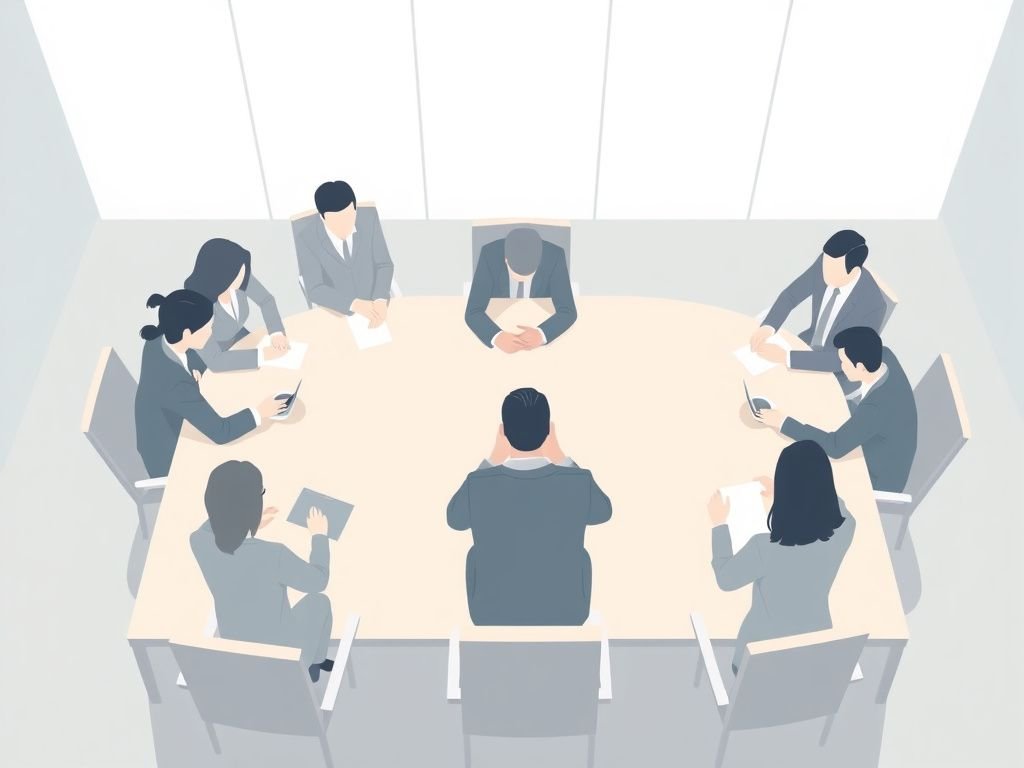
You're in a "brainstorm" or a "planning session." The same two or three people do all the talking. You, perhaps. The department head. The other outspoken lead. Meanwhile, the rest of the room—the people who *actually* do the work—are just observing. Nodding.
This isn't alignment. This is disengagement .
The Signal: The same 2-3 people talk, while everyone else just listens. The "airtime" in the meeting is split 90/10.
What it means: This is one of the most dangerous forms of Brittle Consensus. You are only getting the opinion of the most confident, most senior, or most extroverted people in the room.
Why are the others quiet?
- They're processing: Introverts and deep thinkers often need time to formulate a thought. By the time they have, the loud talkers have moved on.
- They're intimidated: The "loudest" voice or the "most senior" person has already spoken, and they don't feel safe challenging them.
- They're strategic: This is a key form of "lip service." They've learned that if they don't engage, they can't be "volunteered" for the follow-up work. They're avoiding responsibility by being invisible.
The result is that you are making a decision with only 20% of the available data. The expertise you *hired* for is sitting quiet, and you're about to walk off a cliff they all saw coming.
How to Get the 'Quiet Room' to Talk
1. The 1:1 Follow-Up (Good)
The most obvious solution is to not call them out in the group. Follow up 1:1 or in a smaller setting. Ditch the generic "What did you think?" and ask something specific and safe:
- "What's one thing you were thinking about that we didn't get to cover in there?"
- "You've got the most experience with [system X]. What's one part of this plan that makes you nervous?"
2. The Pre-Brief (Better)
Stop asking people to do complex analysis "live" in a high-pressure meeting. Send your "V0.1 Draft" or "Strawman" doc 24 hours *before* the meeting.
Ask everyone to use the "comments" feature to add one question and one concern *before* the meeting starts. This gives processors time to think and "speak" without having to interrupt. The meeting then becomes about discussing the *comments*, which is far more productive.
3. The Structured Share (Best)
Don't leave participation to chance. Use a structure that *requires* everyone to speak, even for just 15 seconds.
- The "Round Robin": "We're going to go around the room. In one sentence, what's your main takeaway/concern?"
- The "Brainwrite": Give everyone 3 minutes to write down their 3 biggest risks on sticky notes (or a virtual whiteboard). Then, you read *all* the notes aloud anonymously. This separates the *idea* from the *person*, making it safe to share.
Don't mistake silence for agreement. It's often disengagement, and it's your job as a leader to build a structure where every voice can be heard.